From Wikipedia, the free encyclopedia
Compound interest is interest accumulated from a principal sum and previously accumulated interest. It is the result of reinvesting or retaining interest that would otherwise be paid out, or of the accumulation of debts from a borrower.
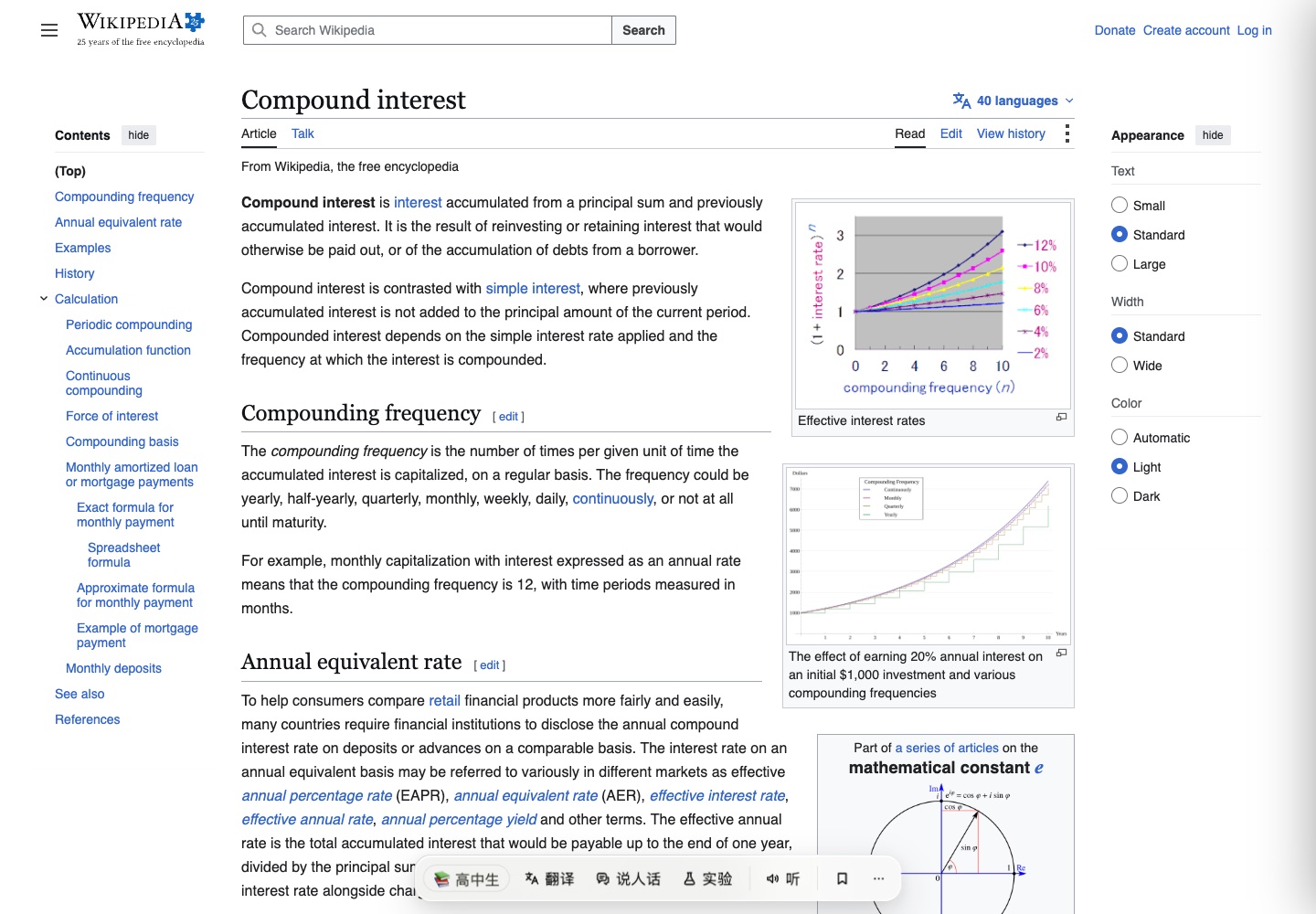
Compound interest is contrasted with simple interest, where previously accumulated interest is not added to the principal amount of the current period. Compounded interest depends on the simple interest rate applied and the frequency at which the interest is compounded.
Compounding frequency[ edit ]
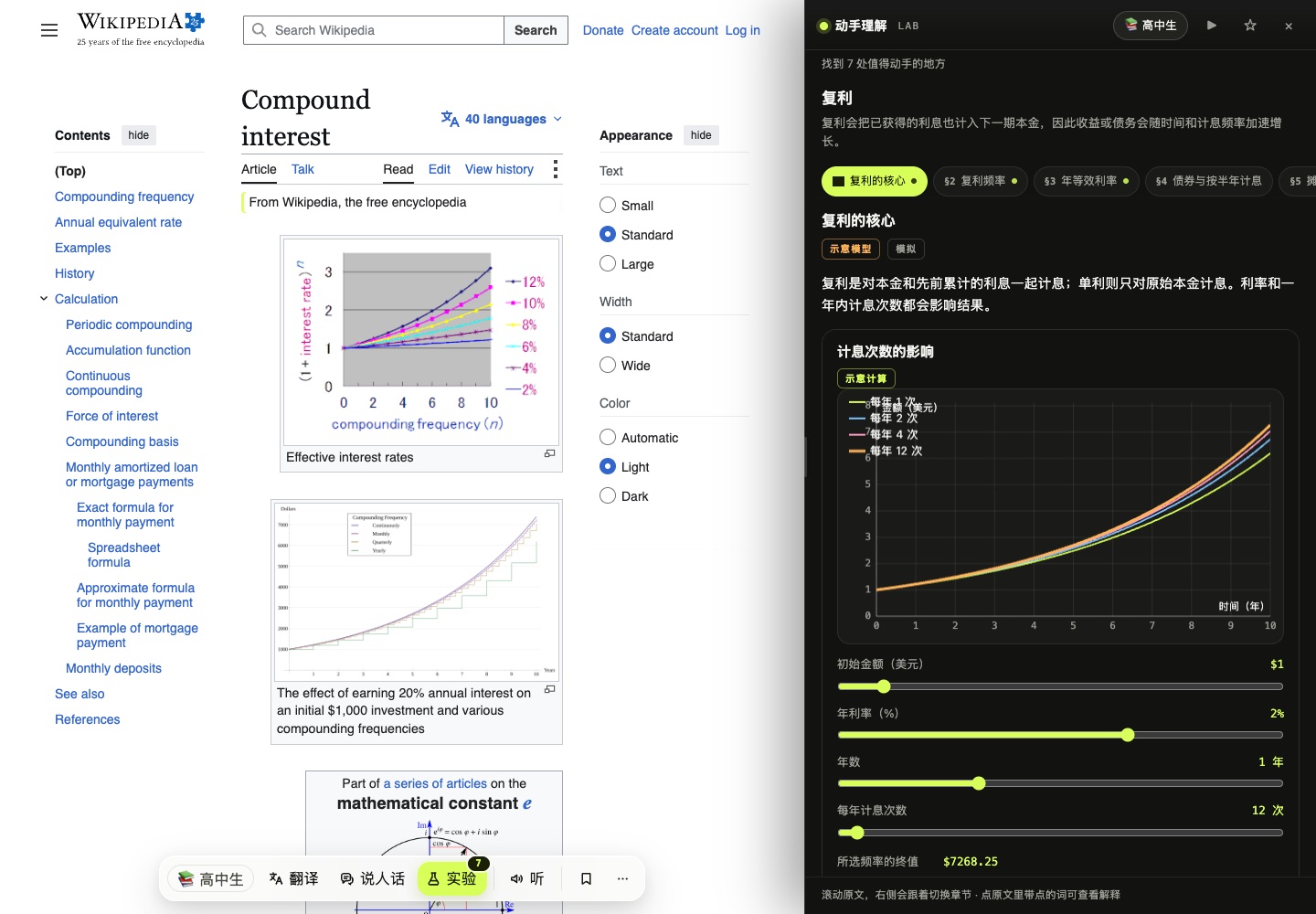
The compounding frequency is the number of times per given unit of time the accumulated interest is capitalized, on a regular basis. The frequency could be yearly, half-yearly, quarterly, monthly, weekly, daily, continuously, or not at all until maturity.
For example, monthly capitalization with interest expressed as an annual rate means that the compounding frequency is 12, with time periods measured in months.
Annual equivalent rate[ edit ]
To help consumers compare retail financial products more fairly and easily, many countries require financial institutions to disclose the annual compound interest rate on deposits or advances on a comparable basis.
Examples[ edit ]
Corporate and government bonds most commonly pay interest twice a year.
Canadian mortgage loans are generally compounded semi-annually, with monthly payments.
US mortgages use an amortizing loan, where payments cover interest first and principal after.
The effect of earning 20% annual interest on an initial $1,000 investment and various compounding frequencies